The F1 Times

Introduction

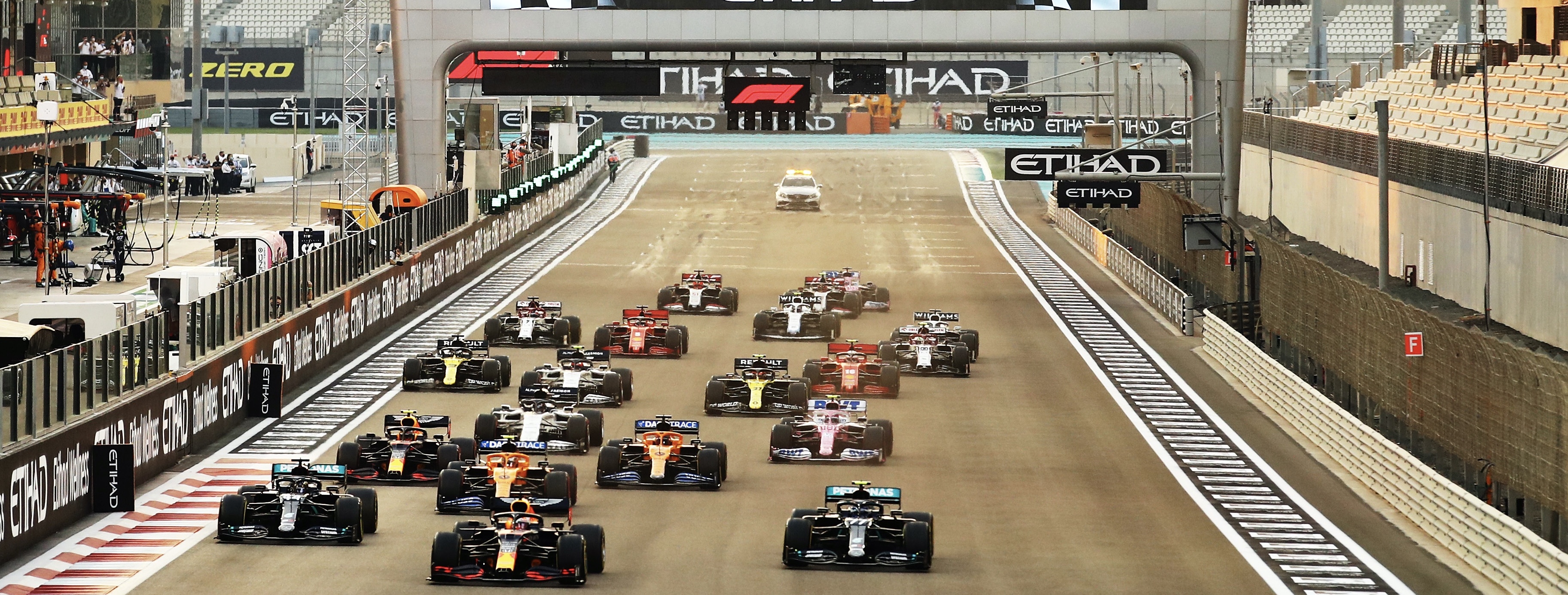
Image taken at the Yas Marina Circuit at the 2020 Abu Dhabi Grand Prix

Introduction: What is Formula One

It’s lights out and away we go looking into the premier forms of racing around the world: Formula 1. Governed by the Fédération Internationale de l'Automobile or the International Automobile Federation (FIA), Formula One, commonly known as F1, is considered the highest class of international racing for single-seater formula cars in the world. Where 10 teams from around the world, each composed of 2 drivers, compete in a series of races (Grand Prix) over a one-year period or a season. These races take place all around the world in both purpose-built (Circuit of the Americans) and closed road circuits (Azerbaijan Street circuit) certified by FIA as teams accumulate points to determine 2 annual championships: one each for drivers and teams (constructors).

With its inaugural season taking off on May 13, 1950, at the Silverstone Circuit (United Kingdom), there have been 71 seasons as of 2020; 2021 being its 72nd. The term “formula” comes from a set of rules that participating teams and constructors must adhere to.
The Victors: The F1 Driver's Championship

With all Grand Prixs (*grann prees) throughout a season, how does one win a Formula One World Championship Season?

The competition awards two champions annually: one to the driver that scores the most points and another to the team that scores the most between both drivers. The current 2021 season follows a 25-18-15-12-10-8-6-4-2-1 point system which means drivers until 10th in a Grand Prix are awarded points, with the 1st scoring 25. Additionally, a bonus point is available to the driver who records the fastest lap of the race, but the point is only awarded if the driver places within the top 10.

At the end of the season, points of drivers and teams are added to determine that year’s Champions. In Formula 1 history, the most points scored were achieved by Lewis Hamilton in 2019 with 413.

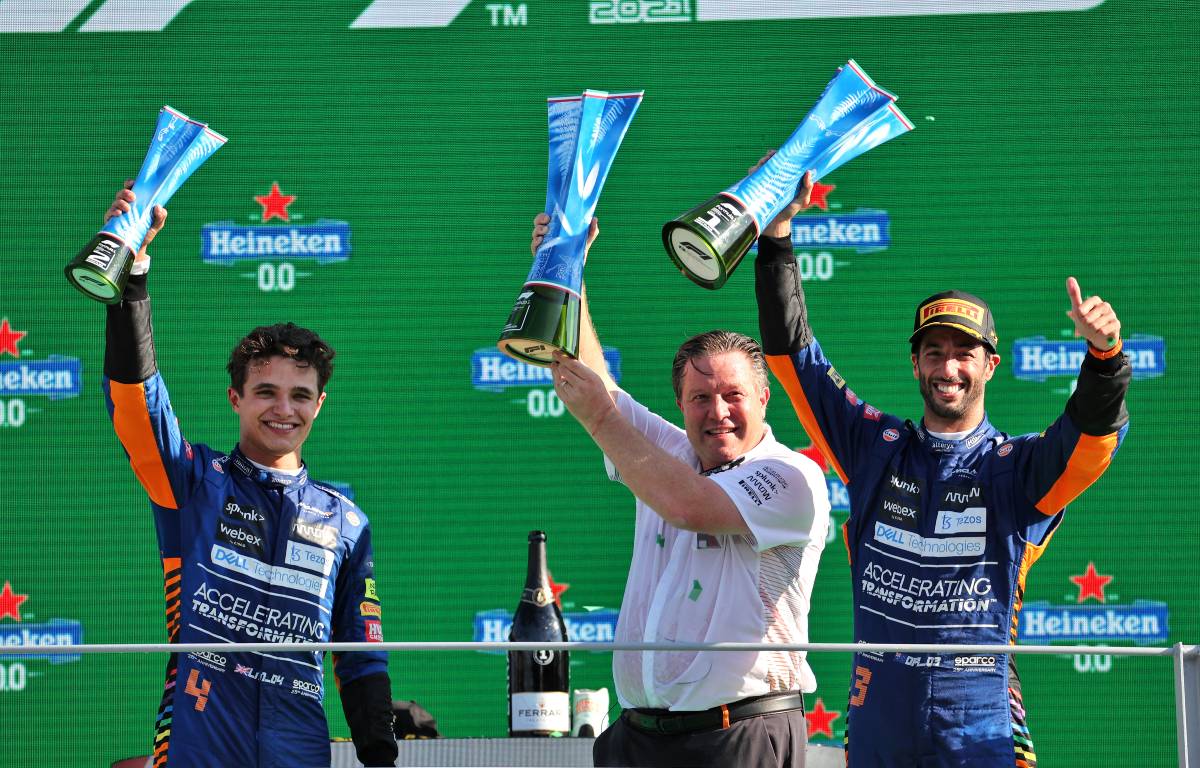
Image from Planet F1 at the 2021 Monza Grand Prix

Looking back: Formula One Origins

While Formula 1 began in 1950, its roots can be traced back to the pioneering road races of 1890 France at the birth of motor racing. The plans for a Formula One drivers’ championship were discussed in the late 1930s during the European Championship; due to World War II putting a stop to all racing, the idea was shelved. In 1946 the idea was revived, races were held in the year and the first championship was launched in May 1950.

From its inaugural season, the sport has seen a great number of changes in rules, engineering design, and driver line-up with the Constructors Championship title introduced in 1958, changes in the point-system, and most recently, the introduction of Sprint Qualifying.

In the past 71 years, this competition has witnessed 33 drivers and 15 teams win the championship. One of the biggest names of the sport is 7-time world champion Micheal Schumacher as well as road car manufacturer teams like Mercedes, Ferrari, McLaren, and Maserati. The first-ever driver’s championship was achieved by Italian driver Guiseppe Farina, driving an Alfa Romeo defeating fellow teammate Argentine driver Juan Manuel Fangio. Though losing in his first season, the latter came back strong, winning in 1951 and following up with victories in 1954, 1955, 1956, and 195–an early record set with 4 consecutive wins.

7 seasons in, the Constructors’ Championship was first awarded in 1958 to British racing team Vanwall, the only 1 achieved by the team who entered the competition in 1954. However, the team with the most constructors’ titles was achieved by British motor racing team McLaren with 13, just above Ferrari with 12.

Photo by David Phipps
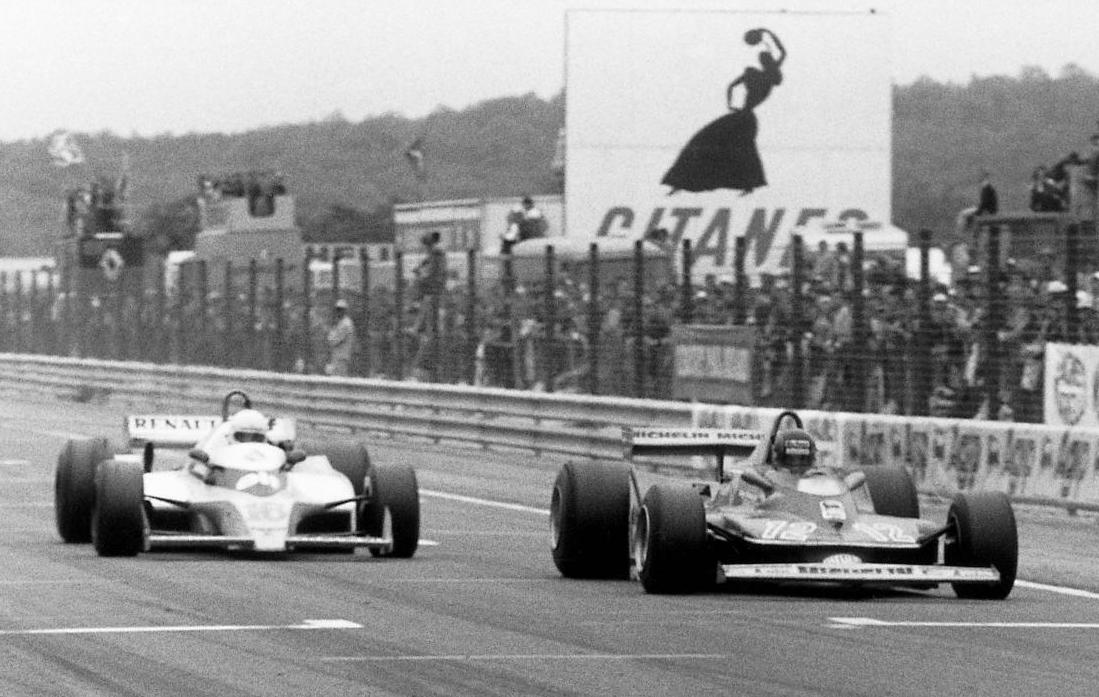
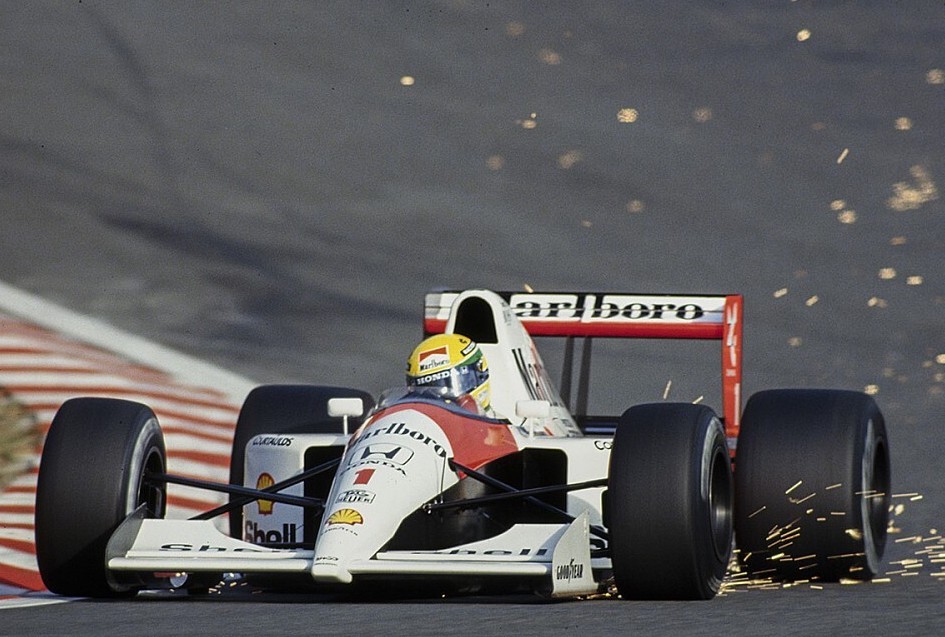
1989 Monaco Grand Prix photo from TopGear

The breakdown: What is a Formula One Grand Prix?

Held over a weekend, each Grand Prix is split into four different parts, which start on Thursday with a designated Press Day and end with the actual race on Sunday. With a global audience of over 433 million people, the sport gains a lot of coverage from the media; thus, Thursdays for every race weekend are designated for Press Conferences and Online fan meet and greets with drivers. But distractions aside, the weekend focuses on the more-exciting events and action on the track. The key sessions over the weekend are the 3 1-hour free practice sessions, 1 1-hour Qualifying session divided into 3 smaller sessions (Q1, Q2, Q3), and the Race which can span from 1-3 hours with weather conditions and the occurrence of accidents.

Free Practice

A driver’s first experience on the circuit is the Free Practice sessions. Roughly 20-22 races occur per year, yet each track is only used once per season. Each track differs in layout, elevation, some circuits have high-speed corners, some with long straights, some are spacious, while some make for a tight race—these aspects can affect a car’s performance in the race. Thus, before each race, team engineers and strategists tweak cars to ensure their best performance.

It is prohibited for drivers to drive in circuits prior to the scheduled Grand Prix. While there are digital simulators for a general layout, free practice sessions are essential for drivers to get a feel of the track to plan how they would maximize their car’s performance.

3 practice sessions occur across Friday and Saturday, FP1 and FP2 run for 1.5 hours with FP3 running shorter at an hour. Teams use this part of the weekend to understand the cars’ Qualifying pace (best time that can be achieved in a single lap), Long Run pace (best time that can be achieved over multiple laps while keeping tyre degradation, fuel usage, before and strain on power-unit to a minimum), Tyre (each race has a designated set of tyres that can be used see Race section for more information) and Fuel Management.

As this doesn’t show much racing, one can see an overview and predict a cars’ performance throughout the weekend watching the Free Practice.

Qualifying

Saturday Qualifying occurs hours after the last Free Practice, also running for 1 hour. Fans get to see car performance put to the max as the results of this part determine what place a driver will start in the actual race. The hour is divided into 3 smaller sections as mentioned before: Q1, Q2, and Q3.

Assuming the session runs smoothly with no weather or penalty interruptions, Q1 runs for 18 minutes where drivers complete 1-2 flying laps intending to achieve their best time. At the end of the session, the 5 bottom drivers are eliminated. Their finishing order determines P16 to P20 on the Sunday grid.

We then move on to a 15 minute Q2 session where the remaining 15 drivers complete another 1-2 laps in which the bottom 5 are eliminated filling up P11 - P15. Any driver not eliminated in this session makes it to the final qualifying session (Q3). An additional rule was added in 2010, in which the top 10 drivers of the session (those that make it into Q3) are required to start Sunday’s race on the same tire compound they used to set their fastest time this session (tire compound explanation in the Race section).

Finally, at the end of Saturday Qualifying is Q3 running for 12 minutes with the top 10 drivers. Another 1-2 flying laps are done by drivers, every driver is also given an extra set of unused soft tires (these offer the most grip which leads to faster racing on dry tracks) as they fight to claim the coveted pole position (P1). The finishing positions of the session determine P1 - P10 for the starting grid. On to the race day!

Race Day

Without accounting for penalties, the car lineup for the starting grid is what was determined in qualifying. Each race is around 305 kilometers (with exception to the Monaco Grand Prix of 260 km), the number of laps is determined based on the track’s length. Final checks on the car’s brakes and tires are done in the formation lap at the start of every race before drivers line up in their assigned grid slot.

A short wait for the 5 red lights to go out and the race begins! The number of laps to complete per race is predetermined and all drivers are required to use two different tire compounds per race (2 of the following; soft, medium, or hard). This means one pitstop is required as well for the tire change. However, this run only goes for dry races, there are no minimum requirements for wet races (races where weather conditions like thunderstorms cause the track to become wet).

After the first 2 laps of the race or after a race restart, the Drag Reduction System (DRS) is available. In essence, DRS is a function that allows the rear wing of a car to flap open (open-up). This only applies if they are within 1 second of the car in front of them or when they are in the designated DRS zone of the track. This system is designed to provide overtaking opportunities as it reduces the effects of dirty air (see race section for more information) This also provides a more thrilling race for fans.

The chequered flag is shown at the end of the Grand Prix to determine the finishing order. This is also done to alert the driver they have completed the race. The points are awarded and the race weekend ends in the Podium celebration.

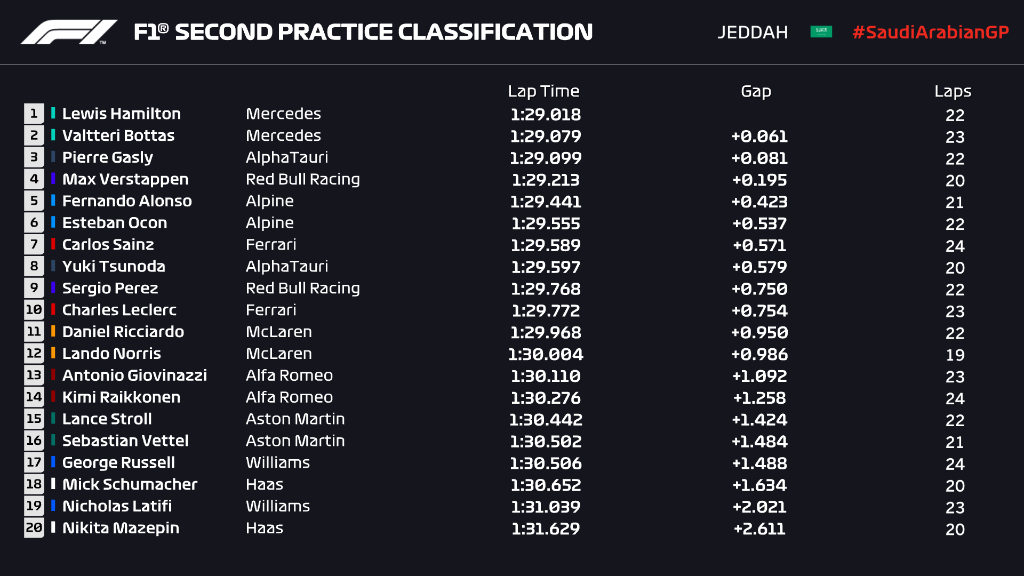
2021 Saudi Arabia Grand Prix Free Practice 2 Results
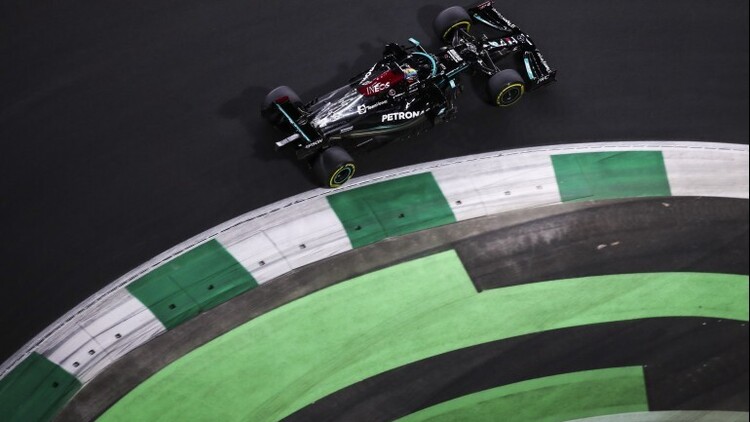
Lewis Hamilton at the 2021 Saudi Arabia GP Qualifying
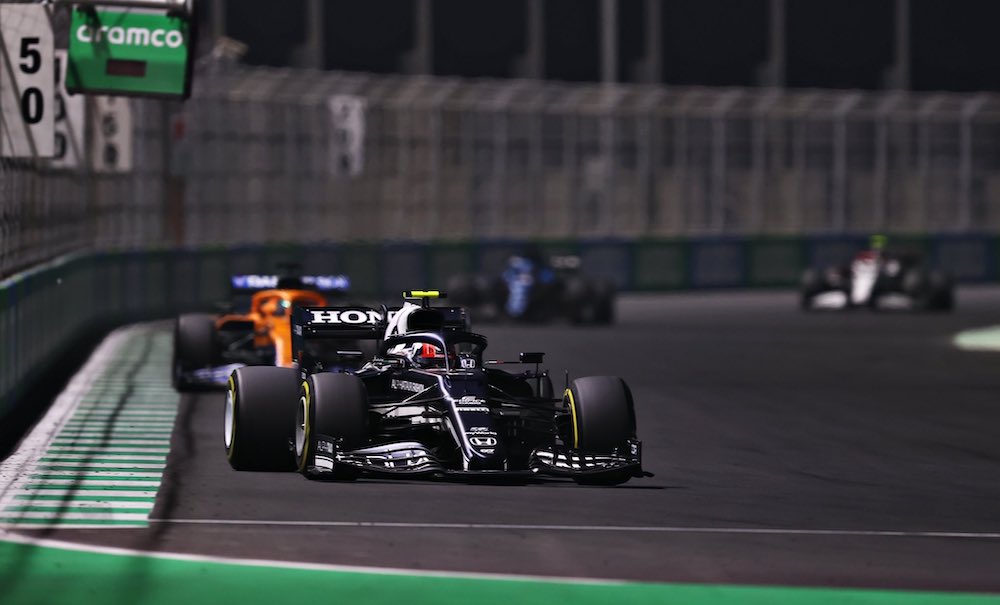
Alpha Tauri at the inaugural Saudi Arabia Grand Prix via @AlphaTauriF1 on Twitter

References

Gupta, E. (2020, July 10). How does an F1 weekend work? Medium.https://medium.com/projectf1/how-does-an-f1-weekend-work-cdd6bd5edb35

Balfour, A. (2018, January 4). What happens on a typical grand prix weekend? Formula 1 Official Ticket & Travel Packages | F1 Experiences. https://f1experiences.com/blog/what-happens-on-a-typical-grand-prix-weekend

Media. (2021, April 21). What is Formula 1? F1 Chronicle. https://f1chronicle.com/what-is-formula-1/